Construction Injury Triage
Remote Construction Injury Triage Workflow for Supervisors
Remote construction sites place supervisors in the first decision role after an injury report, so teams need clear observation steps, escalation rules, hotline guidance, and OSHA-aware documentation.
Remote job sites leave supervisors as the first decision point when a worker reports pain or an injury. Limited on-site resources and long travel times to care make consistent observation, escalation rules, and routing essential. Site supervisor injury decisions improve when teams apply the same early steps and contact points across shifts. Construction injury hotline use gives supervisors direct access to medical direction that understands construction demands rather than routing every report through a general nurse line.
Immediate Decision Path After an Injury Report
Use this sequence immediately after confirming scene safety. Keep the steps on a laminated card or phone note.
- Is the worker conscious, breathing normally, and able to speak clearly? If no, arrange transport and call the hotline from the vehicle. If yes, move to step 2.
- Is there uncontrolled bleeding, obvious fracture with deformity, chest pain, or sudden loss of consciousness? If yes, arrange transport and call the hotline en route. If no, move to step 3.
- Does the worker show dizziness, severe shortness of breath, or inability to bear weight after a fall? If yes, arrange transport and call the hotline en route. If no, move to step 4.
- Call the occupational injury triage line with the documented observations. Follow the provider’s direction on clinic transport, modified duties, or first-aid steps while transport is arranged.
This path keeps emergency resources for true emergencies and routes lower-acuity cases to providers familiar with construction tasks.
Remote Site Injury Assessment
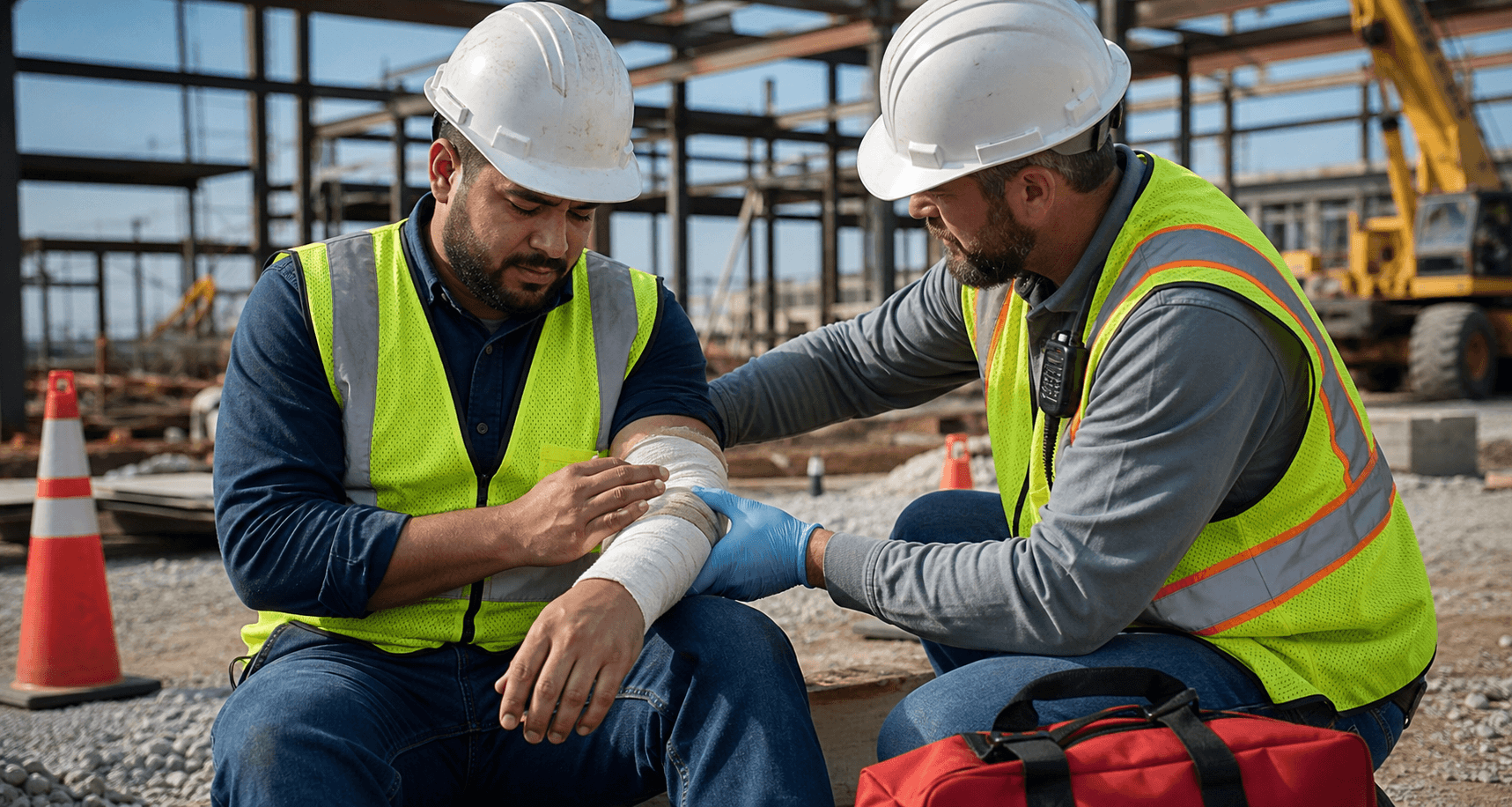
A highway bridge crew once faced a worker reporting shoulder soreness after hours of rebar tying. The worker could move the arm, showed no swelling, and described gradual onset. The supervisor recorded time, location, mechanism, and the worker’s exact words, then called the triage line. The provider directed modified duties and a next-day clinic slot instead of an immediate ER run. The worker stayed productive with adjusted tasks until evaluation.
Remote sites add extra variables. Cell coverage may drop. Travel time to any care point can exceed an hour. Supervisors therefore record exact observations first. They note the worker’s own words about onset, task at the time, and any change in symptoms since the report. They check visible signs such as swelling, bruising, or limited motion without attempting diagnosis. These notes travel with the worker if transport occurs later.
Weather can change quickly on elevated or open sites, so supervisors also note temperature, wind, or recent rain that might affect symptoms or footing. Crew size matters too. When multiple subcontractors share the site, the supervisor confirms which company employs the worker before calling so the right claims contact receives the update. On large spreads, the same supervisor may also note the nearest mile marker or GPS coordinate so the arriving crew or claims adjuster can locate the exact work face without extra calls. See how workplace injury triage supports this pattern for spread-out crews.
Routing Through the Hotline
On a remote wind-farm site, a worker reported a minor laceration from sharp edge contact. Bleeding was controlled on site. The supervisor used the decision path, confirmed no deeper tissue involvement, and contacted the medical direction line. The provider advised wound cleaning instructions and transport to a vetted clinic the same afternoon rather than emergency services.
Hotline calls work best when the supervisor has the facts ready. They state the worker’s description, time of event, first-aid steps already taken, and current status. The provider then gives a clear next action. Supervisors who use one consistent triage partner across multiple projects receive steadier guidance on when light duty fits the job demands. On tower or transmission projects the same line can also confirm whether the worker’s task history includes recent electrical exposure that might change the recommended next step. Review the approach at medical direction.
Documentation for Workers’ Compensation
After the hotline call, update the incident log with call time, advice received, and any instructions given to the worker. Photograph visible injuries only with consent and store images securely. Track facts such as reported symptoms and first-aid steps taken. Supervisors record observations only. Employers remain responsible for final recordability decisions. A clinic visit or diagnostic test by itself does not determine OSHA recordability. Recordability depends on treatment beyond first aid, prescription medication at prescription strength, restricted work, job transfer, days away, or other specific criteria. Link the same log to the claims contact the same day. When the site uses daily shift reports, the injury entry is copied into that system so the next supervisor sees any pending follow-up. See how supports this handoff for construction teams.
Near-Miss Logging on Remote Sites
Near-miss entries belong in the same daily log used for actual injuries. After logging, assign one crew member to verify the reported condition is corrected before the next shift. Add a second concrete step: photograph the corrected condition and attach the image to the log entry with date and time. Review the entries at the next toolbox talk so crews see reporting as routine rather than punitive. Patterns in near-miss logs often point to equipment setup or crew fatigue that injury reports alone miss. On remote sites, add the location coordinates or mile marker so the safety team can find the exact spot even if the crew has moved to the next phase of the project. Supervisors also note which subcontractor crew was present so the same hazard can be flagged in the next pre-task plan.
After-Hours Follow-Up Steps
When an injury occurs outside normal clinic hours, the same triage line stays available. Document the call time and any instructions for the worker to follow until morning. Send a brief text summary of the hotline instructions to the worker’s phone before the shift ends. Add one more concrete step: confirm the worker has arranged transport for morning evaluation if the provider recommends it. If family members contact the site with questions, direct them to the occupational provider or claims adjuster. Early coordination with return-to-work planning begins once restrictions arrive from the evaluating provider. On projects with rotating crews, the outgoing supervisor also leaves a short note in the shift log so the incoming supervisor knows to check on the worker first thing. See how return-to-work programs help match restrictions to available site tasks.
When to Send to Clinic Versus Onsite Support
Some remote-site injuries fit onsite first-aid or modified duties while others need prompt clinic evaluation. Use the decision path to separate the two. For a possible ankle twist on uneven ground, note the worker’s ability to bear weight and any immediate swelling before calling. For a minor cut from rebar, focus on bleeding control and whether the wound needs professional cleaning. The resource at when to send an injured worker to the clinic outlines additional decision points supervisors can apply on spread-out projects.
Recordkeeping Facts Supervisors Track
Supervisors record time of report, worker description of the event, visible signs, first-aid steps taken, hotline contact time, and instructions received. They do not interpret fault or assign recordability. Employers review the official OSHA criteria at https://www.osha.gov/recordkeeping when questions arise. Additional support for documentation appears at OSHA recordkeeping support.
This article is informational and does not replace licensed medical care, legal advice, OSHA compliance counsel, or professional review. Employers remain responsible for final recordability, accommodation, and workers’ compensation decisions.
Talk to Industrial MD about workplace injury triage
https://industrial-md.com/contact-us/
How Construction supervisor injury response Supports Employer Injury Workflows
Construction supervisor injury response can help supervisors document remote injury facts, coordinate routing decisions, and keep follow-up communication consistent without replacing employer or clinical judgment.
For related workflow support, employers can use the first 24 hours after a workplace injury when coordinating documentation, routing, and follow-up.
FAQ
What is the first thing a supervisor should do when an injury is reported? Confirm scene safety, approach the worker, and record the time plus the worker’s own description of the event before any further steps.
How should hazards or injuries be reported to reduce the chance of hidden incidents? Use a simple daily log that captures every report, including near misses, and review entries openly at toolbox talks so crews see reporting as routine.
What process helps supervisors understand the cause of a safety incident? Start with the supervisor’s factual observations, add the hotline guidance received, and later include any root-cause notes from the safety team after the worker receives care.
Why is it critical to report near-miss events on construction sites? Near misses often share the same conditions that later produce recordable injuries, and early logging lets crews adjust practices before someone is hurt.
When should restricted work or return-to-work planning begin after an injury? As soon as functional restrictions arrive from the evaluating provider, supervisors can match them against available site tasks rather than waiting until the worker is cleared for full duty.