Construction Injury Response
Industrial Medical Services: Triage for Construction Employers
Construction employers use industrial medical services to create consistent response pathways that combine supervisor hotline contact, basic triage steps, and routing to occupational clinics for clearer documentation and worker guidance.
Construction employers often need coordinated medical support that matches the pace and hazards of job sites. Industrial medical services typically combine 24/7 hotline access, onsite triage guidance, and routing to occupational clinics so teams can respond without defaulting to the emergency room for every incident.
Many construction operations run on tight schedules with crews spread across multiple locations. When something happens, a defined first-contact pathway can change how quickly facts reach decision makers and how clearly the worker gets next-step guidance. Industrial medical services focus on aligning medical input with remote access, variable weather, equipment-heavy work, and after-hours shifts.
Hotline Access as the First Response Layer
A dedicated hotline staffed by occupational medicine providers gives supervisors an immediate point of contact. The call can clarify whether an injury needs onsite first aid, clinic evaluation, or higher-level care. Early guidance can reduce unnecessary ER trips while documenting the initial decision.
Construction sites frequently operate outside standard business hours. A 24/7 hotline lets supervisors reach a provider during night shifts or weekend pours. The conversation usually covers mechanism of injury, visible symptoms, and whether the worker can continue safely. Providers may suggest monitoring, basic first aid already available on site, or transport to a clinic. That call creates a timestamped record safety and claims teams can use later.
Onsite Triage Workflows Supervisors Can Follow
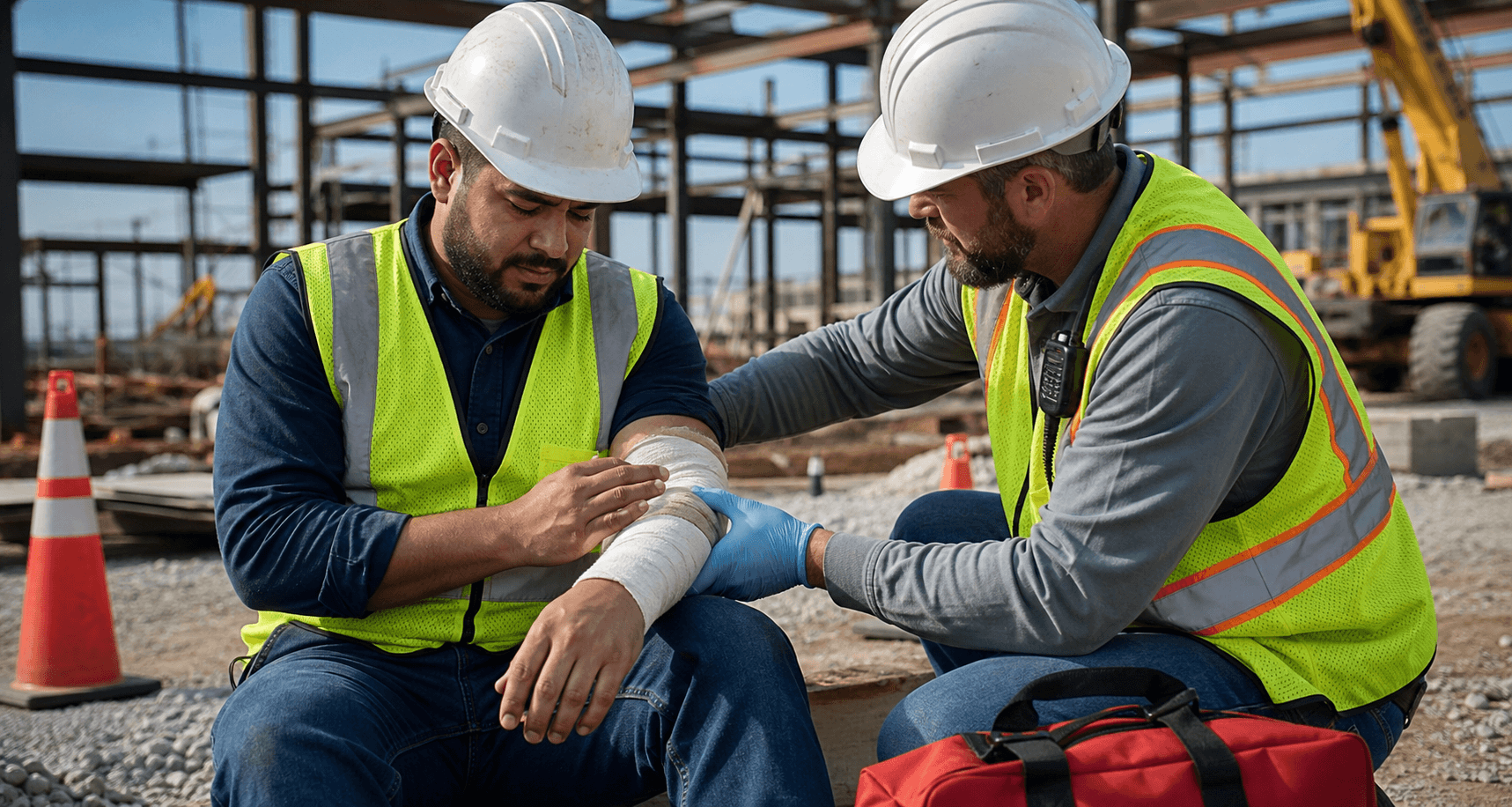
Supervisors need clear steps after an incident: secure the area, gather facts, contact the hotline, apply basic first aid when appropriate, and decide next actions with provider input. These workflows focus on timely documentation and employee comfort rather than on-site diagnosis.
A common sequence starts with removing additional hazards, then capturing the task being performed, body part involved, and any immediate complaints. Once connected to the hotline, the supervisor relays those details and receives guidance on whether to keep the worker on site, arrange transport, or initiate emergency services. Notes on time of call, provider name, and instructions given keep the record consistent across shifts.
Workplace injury triage gives construction teams a structured way to connect hotline support with field decisions.
Routing Decisions and Clinic Selection
Not every injury needs the same level of care. Routing considers injury type, site location, and available occupational clinics. Employers often compare occupational health centers with urgent care based on hours, imaging access, workers' compensation experience, and how clearly the clinic writes work-status notes.
Distance matters more in construction than in fixed plants. A clinic thirty minutes away may be a better fit than an emergency room ten minutes away if the clinic handles occupational cases regularly and returns usable restrictions. Some teams keep a short preferred-provider list and update it when project locations change.
When to send an injured worker to the clinic outlines the practical factors supervisors should review before transport.
Recordability Considerations During Response
Employers track cases against OSHA criteria that include treatment beyond first aid, restricted work, or days away. Diagnostic tests alone do not determine recordability. A clinic visit can lead to recordable outcomes depending on the care provided. Employers remain responsible for final recordability decisions and should consult their safety or legal resources. See OSHA 1904.7 for the regulatory criteria on medical treatment and recordability.
Initial documentation from the hotline call and any clinic visit supplies the facts safety teams review when completing forms. Prescription-strength medication, work restrictions, or job transfers may trigger recordability. Because criteria involve multiple variables, many employers route those determinations through designated personnel rather than field supervisors alone.
First 24 hours after a workplace injury covers initial documentation practices many construction teams follow. OSHA recordkeeping support can help keep early response notes aligned with later claims documentation.
Integration with Return-to-Work Planning
Early triage can support smoother return-to-work conversations when functional restrictions are identified. Medical direction helps translate provider recommendations into job-specific accommodations where feasible.
Construction tasks often involve physical demands that differ from office environments. A restriction such as limited lifting or no ladder work may require reassignment to lighter duties or modified shifts. When triage includes early communication with the provider, the employer can start identifying possible accommodations before the worker returns. That coordination may shorten time away when suitable tasks exist on the current project.
Return-to-work programs describe how employers coordinate restrictions with project schedules without treating every note as a full off-work order.
Measuring Value of Industrial Medical Services
Teams often track metrics such as ER avoidance rates, time to first provider contact, and days away from work. These indicators help evaluate whether the service model aligns with site needs. Results vary by injury mix and implementation.
Some employers review quarterly summaries that compare total incidents against the number routed through the hotline versus direct ER transport. Others examine average response time from incident report to provider contact. Because construction projects differ in size, location, and crew experience, benchmarks tend to be developed internally rather than applied as universal guarantees.
A useful monthly review also looks at documentation quality: Were mechanism, symptoms, and first aid captured on the first call? Did clinic notes return with usable restrictions? Did supervisors know who owned follow-up? Those operational details often matter more than a single headline metric.
Selecting a Provider for Construction Settings
Criteria include 24/7 availability, experience with remote sites, licensed medical oversight, and clear communication with safety and claims teams. Reviewing sample workflows and response times before engagement can inform the decision.
Construction employers may request references from other contractors or review how the provider handles after-hours calls during peak project periods. Clear escalation procedures for serious incidents and straightforward reporting formats for claims adjusters are additional points some teams evaluate. A trial period on a single project can reveal how well the service integrates with existing safety meetings and incident reporting systems.
Medical direction details one approach to physician-led oversight that keeps triage, documentation, and follow-up connected.
This article is informational and does not replace licensed medical care, legal advice, OSHA compliance counsel, or professional review. Employers remain responsible for final decisions on OSHA recordability, accommodations, and workers' compensation matters.
Construction employers evaluating industrial medical services can review Industrial MD support for construction injury triage and clinic routing to match response pathways with current site operations. \n\nHost employers supervising staffing-agency crews can also use Industrial MD's temporary worker injury management guide for agency notification and clinic-packet handoffs.\n\n Controlling employers can pair this triage model with Industrial MD's multi-employer worksite injury resource for mixed-crew documentation.
FAQ\n
What are industrial medical services? They generally refer to coordinated occupational health support that includes hotline access, triage, and clinic routing tailored to industrial and construction environments.
How does hotline triage differ from basic nurse lines? Hotline support often involves occupational medicine providers who can advise on job-specific considerations and next-level care options rather than only booking the next available appointment.
Do all injuries require a clinic visit? Many minor incidents can be addressed with first aid or remote guidance. Routing decisions depend on injury details and provider input.
How do teams document decisions for recordability review? Employers typically maintain records of the initial report, provider contact, and any care provided. Final recordability determinations remain the employer's responsibility.
What should construction employers consider when choosing a service? Key factors include 24/7 availability, experience with remote sites, licensed oversight, and integration with existing safety and claims processes.