Hiring & Physicals
Pre-Employment Physicals for Industrial Workers: How to Hire Safely Without Slowing Operations
Design compliant, job-specific pre-employment physicals for industrial workers. Reduce early injury risk, protect hiring decisions, and improve workforce readiness.
Executive Takeaway
Industrial roles often involve lifting, climbing, repetitive motion, respirator use, heat exposure, noise, confined spaces, vehicles, tools, and rotating shifts. A generic physical does not tell HR whether a candidate can safely perform those essential functions.
The best pre-employment physical programs are post-offer, consistently applied by job category, tied to a written job demands analysis, and designed with confidentiality and accommodation requirements in mind.
The Legal Guardrails
The ADA restricts disability-related inquiries and medical exams before a conditional job offer. After a real conditional offer, an employer may require a medical exam if all entering employees in the same job category are treated consistently.
If the employer later withdraws the offer based on medical information, that decision must be job-related and consistent with business necessity. Employers should also avoid family medical history requests and should review GINA language in medical questionnaires and vendor forms.
Why Job-Specific Exams Perform Better
A job-specific exam starts with a job demands analysis: weights lifted, carry distances, push and pull forces, overhead work, climbing, kneeling, vision requirements, hearing exposure, PPE, respiratory demands, temperature exposure, and shift conditions.
That lets the occupational provider evaluate the candidate against the real work. The result is more useful than a pass/fail clinic form because it can support placement, accommodation review, baseline testing, and future claim analysis.
Common Exam Components by Industrial Role
- Manufacturing and production: musculoskeletal screen, grip strength, repetitive-motion review, baseline audiogram for noise-exposed roles, and vision checks where quality or machinery tasks require it.
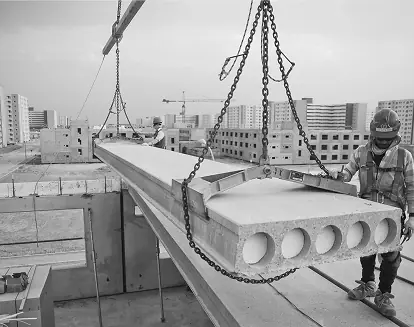
- Construction and field service: lift and carry assessment, climbing and balance considerations, vision and depth perception, hearing baseline, and DOT physical when CDL operation is part of the role.
- Energy, maritime, and mining: cardiovascular considerations, heat tolerance risk review, respirator clearance, audiogram, drug and alcohol testing when required, and job-specific PPE considerations.
- Warehouse and logistics: lumbar and shoulder screen, lift tolerance, lower-extremity stability, material handling demands, and DOT or forklift-related requirements where applicable.
How to Avoid Compliance Mistakes
- Do not order the medical exam before a conditional offer.
- Do not apply the exam selectively to candidates who appear older, injured, disabled, or risky.
- Do not ask the clinic for unnecessary diagnosis details.
- Do not use blanket disqualification rules where an individualized assessment is required.
- Do not rely on a physical unless it maps to the essential functions of the job.
- Do not let hiring speed override documentation, confidentiality, or accommodation review.
Baseline Testing Adds Long-Term Value
Baseline audiograms, respirator clearance, pulmonary function testing where appropriate, and job-specific musculoskeletal documentation can protect both the employee and employer. If a future claim arises, the baseline helps distinguish pre-existing findings from occupational change.
Baseline testing is not a tool for excluding people without analysis. It is a record that improves medical accuracy, claim handling, and workforce protection over time.
Program Blueprint
- Catalog job categories and essential functions.
- Create or refresh job demands descriptions.
- Define exam components by role, not by habit.
- Standardize the conditional offer and scheduling workflow.
- Limit HR-facing results to clearance status, restrictions, and next steps.
- Create an accommodation escalation path with HR, safety, operations, and medical input.
- Track early-tenure injuries, claim costs, and turnover against pre-program baselines.
Why Decision Makers Should Care
Hiring speed matters, but fast placement into the wrong physical role can create a costly injury in the first weeks of employment. Decision makers should view post-offer physicals as workforce readiness infrastructure, not as a hiring hurdle.
The program also improves communication between HR and operations. Instead of asking whether a person is generally healthy, the employer asks a better question: can this candidate safely perform the essential functions of this specific role, with or without reasonable accommodation?
Industrial Use Cases
- Manufacturing lines with repetitive upper-extremity work, standing, reaching, and shift demands.
- Warehouse and logistics roles with lifting, carrying, pallet movement, and forklift-adjacent hazards.
- Construction and field service positions involving ladders, uneven surfaces, tools, and outdoor heat.
- Maritime, energy, and mining roles requiring PPE, confined spaces, remote work, or environmental exposure.
- Telecom and tower roles where climbing, balance, heat, and emergency response readiness matter.
First 30 Days: Implementation Plan
- Separate pre-offer hiring criteria from post-offer medical evaluation steps.
- Create a job demands description for each physically demanding job category.
- Choose exam components that map directly to essential functions and regulatory requirements.
- Tell the provider what HR should receive: clearance, restrictions, accommodation-related limitations, and next steps, not unnecessary diagnosis details.
- Review early-tenure injury trends every quarter and adjust job demands descriptions when the work changes.
KPIs to Track
- Early-tenure injuries within 30, 60, and 90 days.
- Post-offer exam completion time.
- Conditional offers requiring accommodation review.
- Claims involving pre-existing or baseline medical findings.
- Turnover connected to physical mismatch or injury.
- Hiring manager satisfaction with scheduling speed and result clarity.
Frequently Asked Questions
Can we require a physical for every applicant? Medical exams should occur after a conditional offer and should be applied consistently within the same job category. The strongest programs focus on roles with real physical or regulatory demands.
What happens if a candidate cannot meet a requirement? The employer should use an individualized process that considers essential functions, reasonable accommodation, and direct threat analysis where applicable.
Is a pre-employment physical the same as fitness for duty? No. A pre-employment physical is post-offer and pre-placement. A fitness-for-duty evaluation usually applies to an existing employee after a medical absence, safety concern, or changed condition.